
HVAC website design
HVAC website design for repair calls, replacements, and maintenance
Help homeowners find the right heating and cooling service before a hot night, a cold morning, or an expensive surprise turns into a lost lead.
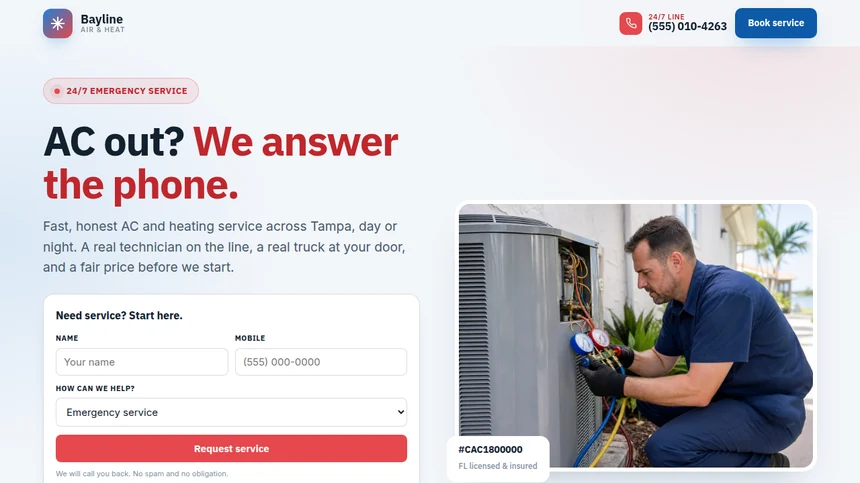
A live hvac site we built. Open the full example →
What HVAC customers decide before they call
An HVAC visitor is usually in one of three states and they are not remotely alike. The air conditioning has stopped in August and the house is already at eighty-six degrees, in which case nothing on the page matters except how fast someone can get there. Or the system is fifteen years old, still limping, and they are quietly pricing a replacement before it dies on its own terms. Or they are shopping for a maintenance plan because the last surprise repair hurt. Speed language wins the first, cost clarity and financing win the second, and predictability wins the third. Most HVAC sites shout about emergencies on every page and quietly lose the two customers worth the most.
What an HVAC website has to prove
Trust in this trade is mostly about competence and honesty, because the homeowner cannot evaluate either. State your licence, the brands you are certified to install, and how long you have worked in the area. Be specific about diagnostic fees and whether they get credited toward the repair, because that single question decides a lot of calls. If you offer maintenance agreements, spell out exactly what a visit includes rather than listing it as a benefit. Photographs of clean installations, tidy line sets and labelled equipment do real work here, because they suggest what your technicians are like on a job.
Turning HVAC website visits into booked work
The no-cooling call is a phone call, full stop. Make the number tappable and permanent on mobile, and say your hours and whether you take after-hours calls without making anyone hunt. Everything else can be a form, but keep it short: address, what the system is doing, roughly how old it is, and whether it is cooling, heating or both. For replacement enquiries, offering a scheduled in-home estimate converts better than a quote request, because the customer knows nobody can price a system sight-unseen. Financing pre-qualification near the replacement content catches the people who assume they cannot afford it.
What we build into every HVAC website
Your HVAC site gets separate paths for emergency repair, replacement, maintenance plans and indoor air quality, each with its own enquiry route. The repair form captures system age, symptoms and address so a dispatcher can triage before calling back. Maintenance plans get a page that explains what is included per visit and what it costs monthly. Financing sits with replacement content. Seasonal messaging can be swapped as we move from cooling into the short heating season, and every lead lands in the CRM tagged by type, so emergencies and replacement estimates do not sit in the same undifferentiated inbox.
Where HVAC websites usually go wrong
The biggest one is treating the site as an emergency page with a services list bolted on. The second is burying the phone number below the fold on mobile, which is where the panicked August customer is. Many HVAC sites also refuse to discuss the diagnostic fee, which reads as evasive and costs calls to whoever is upfront about it. Stock photography of snowy houses is quietly absurd in Florida. And a maintenance plan described only as "peace of mind" without a list of what actually happens on the visit converts far worse than one that says plainly what a technician checks.
HVAC website design for the Tampa Bay area
Cooling season here runs most of the year and the heating season is short and mild, which flips the usual national playbook. Humidity control matters as much as temperature, so indoor air quality and dehumidification are real searches, not upsells. Coastal properties in Pinellas deal with salt corrosion on condenser coils that inland Lakeland systems never see. Peak demand collapses into the hottest weeks, when response time is the entire buying decision. Naming the neighbourhoods and counties you cover matters because a customer with no cooling will not wait to find out whether you drive that far.
Want a HVAC site like this?
We design, build and host it, and you approve it before it goes live. $97/month, setup waived.
Start my $1 trial →HVAC website design questions
Should I list my diagnostic fee on the site?
Almost always yes. It is the question customers most want answered before calling, and being vague about it sends people to whoever is clear. Stating the fee and whether it is credited toward the repair tends to increase calls, not reduce them.
How should the site handle no-cooling emergencies?
With a tappable phone number that never scrolls away on mobile, plainly stated hours, and an honest after-hours policy. A form is the wrong tool for someone sitting in an eighty-six-degree house.
Can the site sell maintenance plans?
Yes, and it works best when the page lists exactly what a visit includes and what it costs per month rather than describing it as peace of mind. We can take signups and payment directly.
Do I need separate pages for repair and replacement?
Yes. They are different customers with different urgency and budget. One page trying to serve both usually converts the emergency and loses the replacement, which is the larger job.
Can you show financing options?
Yes. Financing information sits next to replacement content where the affordability question actually comes up, and we can link to your provider's pre-qualification flow.
How do leads reach my team?
Every enquiry drops into your CRM tagged by type and triggers a text and email. Emergencies are separated from estimate requests so your dispatcher is not sorting them by hand.
Try everything for $1
The full CRM, the website, AI follow-up in English or Spanish, and your Meta ads tracked. 7 days for $1, then $97/month. No setup fee, no contract. Or talk to a person first.
Start my $1 trial →